

Did you know that the average adult in the United States sits for more than nine hours every single day? This shocking amount of inactivity often leads to stiff joints and persistent back discomfort. It is time to change how we think about our constant movement.
Focus on moving better rather than just moving more. By following a clear daily mobility lifestyle plan, you can unlock your body’s full potential. Small, intentional movements help keep your muscles flexible and your mind sharp throughout the day.
Adding specific mobility exercises to your morning can make ordinary tasks feel much easier. You do not need an expensive gym membership to start feeling better right now. Consistency builds the foundation for long-term health and total physical freedom.
Take the first step toward a more active and vibrant version of yourself. You deserve to live a life without physical limits. Let’s look at how simple habits can transform your physical well-being.
Key Takeaways
- Boost joint flexibility and range of motion.
- Reduce chronic muscle pain and stiffness.
- Improve your posture and spinal health.
- Increase energy levels for everyday tasks.
- Build a sustainable habit for long-term wellness.
- Enhance balance and physical coordination easily.
Understanding Daily Mobility and Its Impact on Your Health
The concept of daily mobility encompasses more than just physical movement; it’s about enhancing our quality of life. Daily mobility refers to our ability to move freely and easily, performing daily tasks with energy and efficiency. As we explore this concept further, it becomes clear that mobility plays a significant role in our overall health and well-being.
What Daily Mobility Really Means for Your Body
Daily mobility is not just about being able to walk or run; it’s about having the flexibility and strength to carry out daily activities without strain. It involves the coordination of various bodily systems, including the musculoskeletal, nervous, and circulatory systems. A well-functioning daily movement routine can significantly improve overall bodily function, reducing the risk of injury and enhancing physical performance.
As Dr. James Levine, a renowned expert in the field of movement and health, once said, “Sitting is more dangerous than smoking, kills more people than HIV and is more treacherous than parachuting.” This quote highlights the importance of regular movement in our daily lives.
How Improved Mobility Transforms Your Daily Life
Improving daily mobility can have a transformative effect on one’s life. It enhances the ability to perform daily tasks, improves posture, and reduces the risk of chronic diseases such as diabetes and heart disease. A functional fitness program that includes mobility exercises can lead to better overall health and an increased sense of well-being.
- Enhanced energy levels throughout the day
- Better balance and coordination
- Improved mental health and reduced stress levels
The Most Common Mobility Limitations and Their Causes
Despite its importance, many people face mobility limitations. These can stem from a variety of causes, including sedentary lifestyles, aging, and certain medical conditions. Common mobility issues include reduced flexibility, strength, and range of motion. Understanding these limitations is the first step towards addressing them and improving overall mobility.
“The greatest wealth is health.” – Virgil
By recognizing the factors that limit our mobility, we can take proactive steps to improve our daily movement routine and incorporate a functional fitness program into our lives, leading to a healthier and more fulfilling lifestyle.
Assessing Your Current Mobility Level
To boost your daily mobility, start by evaluating your current level of flexibility and range of motion. This initial assessment will help you understand your strengths and weaknesses, allowing you to tailor a mobility workout schedule that suits your needs.
Step 1: Perform Simple At-Home Mobility Tests
Begin with simple at-home mobility tests to gauge your current flexibility and range of motion. These tests are designed to be easy to perform and require minimal equipment.
Hip Mobility and Flexibility Check
One effective test is the hip mobility and flexibility check. Stand with your feet shoulder-width apart, then bend to one side, keeping your arms extended. Measure how far you can reach down your leg. Repeat on the other side. This test helps identify any imbalance or stiffness in your hips.
Shoulder Range of Motion Evaluation
Evaluate your shoulder mobility by performing a simple range of motion test. Hold your arm straight out to the side and lift it overhead, then lower it back down. Note any discomfort or limitation in movement. This test assesses your shoulder’s flexibility and can highlight potential issues.
Ankle and Lower Body Flexibility Assessment
Assess your ankle and lower body flexibility by performing a squat. Stand with your feet shoulder-width apart, then lower your body down, keeping your back straight. If you find it difficult to squat or feel strain, it may indicate limited mobility in your ankles or lower body.
Step 2: Identify Your Specific Mobility Challenges
After performing these tests, identify areas where you experience limitations or discomfort. This step is crucial for understanding your specific mobility challenges and how they impact your daily activities.
Step 3: Set Your Baseline Measurements
Record your results from the mobility tests to set baseline measurements. Tracking these measurements over time will help you monitor your progress and adjust your mobility workout schedule as needed. Incorporating joint health practices into your routine can also support your overall mobility goals.
By following these steps, you’ll be well on your way to understanding your current mobility level and creating a personalized plan to improve it.
Essential Mobility Exercises for Every Part of Your Day
A well-structured mobility routine can be the key to unlocking a more energetic and healthier lifestyle. By incorporating specific exercises at different times of the day, you can improve your flexibility, reduce muscle tension, and enhance your overall mobility.
Morning Mobility Exercises to Energize Your Body
Starting your day with mobility exercises can help increase blood flow and energy levels. It’s an excellent way to prepare your body for the day ahead.
Spinal Mobility: Cat-Cow and Thoracic Rotations
Begin with spinal mobility exercises like the cat-cow stretch and thoracic rotations. The cat-cow stretch involves moving slowly between arching your back (like a cat) and rounding it (like a cow), promoting flexibility in your spine. Thoracic rotations help loosen the upper back, improving your posture and reducing stiffness.
Hip Openers: 90-90 Stretch and Hip Circles
Incorporate hip openers such as the 90-90 stretch and hip circles into your morning routine. The 90-90 stretch targets the glutes and piriformis, helping to alleviate tension in the hips. Hip circles, performed by standing with your feet shoulder-width apart and moving your hips in a large circle, can help loosen the hip joint.
Upper Body Wake-Up: Shoulder Dislocations and Arm Circles
To wake up your upper body, try shoulder dislocations and arm circles. Shoulder dislocations involve holding a stick or towel behind your back and moving it up and over your head, then back down, stretching your shoulders. Arm circles help loosen the shoulder joints and improve mobility.

Midday Movement Breaks for Office Workers
For those with desk jobs, midday movement breaks are crucial for maintaining mobility and reducing the negative effects of prolonged sitting.
Seated Mobility Drills
Seated mobility drills can be done right at your desk. Examples include seated leg lifts, desk push-aways, and chair squats. These exercises help maintain blood flow and reduce stiffness.
Standing Stretches and Joint Rotations
Standing stretches and joint rotations can be performed during short breaks. Rotate your ankles, wrists, and shoulders to loosen up tight areas. Standing hamstring and hip flexor stretches can also be beneficial.
Evening Flexibility Training Plan
An evening flexibility training plan can help your body recover from the day’s activities and prepare for rest.
Deep Stretching for Recovery
Engage in deep stretching exercises to aid in recovery. Focus on major muscle groups such as hamstrings, quadriceps, and hip flexors. Hold each stretch for 20-30 seconds to allow for maximum relaxation of the muscles.
Gentle Joint Mobility Work
Finish your day with gentle joint mobility work. This can include slow, controlled movements of your major joints, such as knee rotations and shoulder rolls, to keep them lubricated and flexible.
By incorporating these mobility exercises into your daily routine, you can significantly improve your flexibility, reduce muscle tension, and enhance your overall wellbeing.
Creating Your Daily Mobility Lifestyle Plan
To unlock your full potential, creating a personalized daily mobility plan is essential. This plan will help you integrate mobility exercises into your daily routine, enhancing your overall flexibility and well-being.
Step 1: Define Your Personal Mobility Goals
Start by identifying what you want to achieve through your daily mobility plan. Are you looking to improve your flexibility, reduce injury risk, or enhance your athletic performance? Setting clear goals will help you tailor your mobility exercises to meet your specific needs.
Consider your current mobility level and any limitations you may have. This self-assessment will guide you in creating a realistic and effective plan.
Step 2: Build Your Mobility Workout Schedule
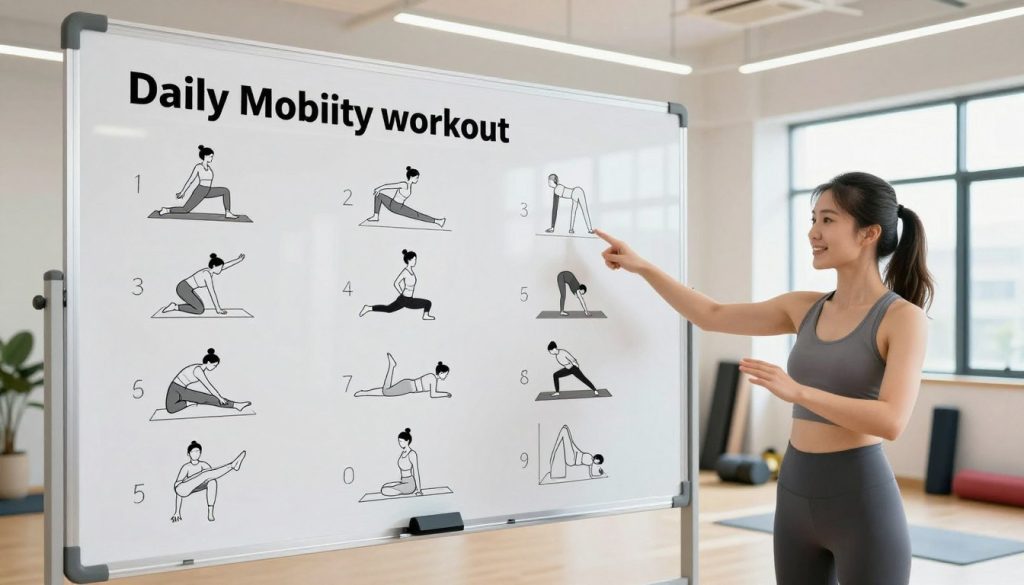
Once you have defined your goals, it’s time to build a mobility workout schedule that fits your lifestyle. This involves determining the optimal frequency and session length, structuring your weekly routine, and combining mobility exercises with your current fitness program.
Determining Optimal Frequency and Session Length
The frequency and duration of your mobility sessions depend on your goals and current fitness level. For most individuals, 2-3 mobility sessions per week are sufficient to see improvement. Each session should last between 10 to 30 minutes, depending on the complexity of the exercises and your available time.
Structuring Your Weekly Routine
To create a balanced routine, consider spreading your mobility exercises throughout the week. For example, you might focus on upper body mobility one day and lower body mobility the next. This approach helps maintain overall flexibility and prevents overtraining.
Combining Mobility with Your Current Fitness Program
If you already have a fitness routine, integrating mobility exercises can enhance your overall performance. Consider adding mobility sessions on non-strength training days or incorporating mobility exercises as a warm-up or cool-down during your strength training sessions.
Step 3: Establish Tracking Methods and Milestones
Tracking your progress is crucial to staying motivated and adjusting your plan as needed. Use a mobility journal or a fitness app to record your exercises, note any improvements, and set milestones for future progress.
Step 4: Prepare Your Space and Tools
Having the right environment and tools can significantly impact your mobility practice. Ensure you have a dedicated space for mobility exercises and invest in any necessary equipment, such as foam rollers or resistance bands.
By following these steps, you can create a comprehensive daily mobility lifestyle plan that enhances your flexibility, improves your overall well-being, and supports your long-term health goals.
Implementing Your Functional Fitness Program and Joint Health Practices
Functional fitness and joint health are interlinked components that can elevate your quality of life. By integrating a well-structured functional fitness program into your daily routine, you can significantly improve your mobility and overall well-being.
Building Functional Fitness into Your Daily Movement Routine
Incorporating functional fitness into your daily life means focusing on exercises that help you perform daily tasks more efficiently. This includes multi-joint exercises that mimic real-life movements.
Multi-Joint Exercises for Real-World Mobility
Multi-joint exercises, such as squats and lunges, work multiple muscle groups simultaneously, enhancing your functional mobility. As noted by fitness expert,
“Multi-joint exercises are essential for building functional strength that translates to real-world activities.”
- Squats: Strengthens legs and glutes
- Lunges: Improves balance and leg strength
- Deadlifts: Works multiple muscle groups including back, legs, and glutes
Balance and Stability Training
Balance and stability are crucial for preventing falls and injuries. Incorporating exercises like single-leg stands and balance boards can significantly improve your stability.
Dynamic Warm-Ups Before Activities
Dynamic warm-ups prepare your muscles for physical activity, reducing the risk of injury. Examples include leg swings, arm circles, and torso twists.
Adopting Joint Health Practices for Longevity
Maintaining healthy joints is vital for long-term mobility. This involves a combination of proper nutrition, hydration, and recovery techniques.
Nutrition and Hydration for Joint Support
A diet rich in omega-3 fatty acids, antioxidants, and adequate hydration supports joint health. Foods like salmon, nuts, and leafy greens are beneficial.
Recovery Techniques and Rest Days
Adequate recovery is essential for joint health. Techniques such as foam rolling, stretching, and rest days allow your joints to repair and rebuild.
When to Modify or Rest
It’s crucial to listen to your body and modify or rest when needed. Ignoring pain or discomfort can lead to long-term damage.
Making Active Living Routines Your New Normal
By integrating functional fitness and joint health practices into your daily routine, you can make active living a sustainable part of your lifestyle. As “Consistency is key to making lasting changes.”
Start by making small changes and gradually build up to more significant adjustments. With time, these practices will become second nature, enhancing your overall quality of life.
Conclusion
By now, it’s clear that incorporating a daily mobility lifestyle plan into your routine can significantly enhance your overall health and wellbeing. Regular mobility exercises not only improve flexibility and reduce the risk of injury but also boost energy levels and contribute to a more active lifestyle.
As you’ve learned, assessing your current mobility level and setting personal goals are crucial first steps. By building a tailored mobility workout schedule and tracking your progress, you can make steady improvements and celebrate your achievements along the way.
Implementing a daily mobility lifestyle plan is a journey, not a destination. It’s about making small, consistent changes that add up to make a big difference over time. Start with simple exercises and gradually build up to more complex movements, always listening to your body and adjusting your routine as needed.
By committing to your daily mobility lifestyle plan, you’ll be taking a significant step towards a healthier, more mobile you. So, take the first step today and discover the transformative power of daily mobility.